
News & Events
13th Sunday in Ordinary Time
Posted in News
28th June 2026
Gospel: Matt. 10, 37- 42
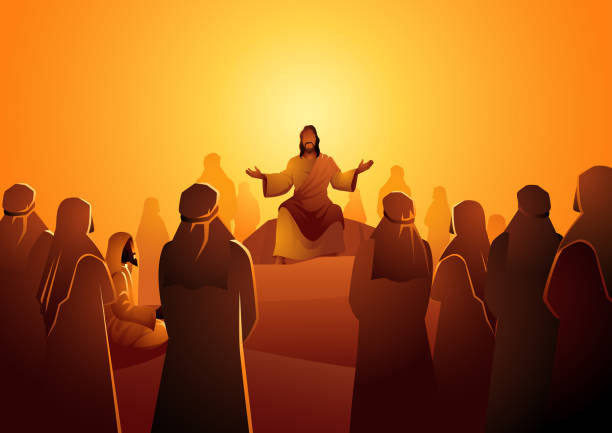
Jesus instructed the twelve disciples as follows. “Anyone who loves their father or mother more than me is not worthy of me; anyone who loves their son or daughter more than me is not worthy of me. Whoever does not take up their cross and follow me is not worthy of me. Whoever finds their life will lose it, and whoever loses their life for my sake will find it. “Anyone who welcomes you welcomes me, and anyone who welcomes me welcomes the one who sent me. Whoever welcomes a prophet as a prophet will receive a prophet’s reward, and whoever welcomes a righteous person as a righteous person will receive a righteous person’s reward. And if anyone gives even a cup of cold water to one of these little ones who is my disciple, truly I tell you, that person will certainly not lose their reward.”
___________________________________________________________
Today the Gospel reading given to us is the last instruction given to the apostles by Jesus. From now on they must learn from seeing how Jesus acts. The Gospel of Matthew 25, 35 -40 which begins with the following verses “For I was hungry and you gave me something to eat, I was thirsty and you gave me something to drink, I was a stranger and you invited me in” and then continues with many of the problems that the poor suffer, relates in a very succent way with the Gospel passage given to us for our meditation on this the 13th Sunday of Ordinary Time, cycle A. I remember as a little boy hearing my father upbraid one of my brothers for defending me from a bigger boy in school. Of course, the other members of my family were upset and remained upset even though my father explained to them that he did what he did because that boy was from a family without love and the boy in question needed to experience the care and concern of the principal of the school. As I began meditating on the Gospel reading for this the 13th Sunday of Ordinary Time, Cycle A, that incident came to mind. I remember not understanding what my father had said, I remembered the questions in my mind and thinking how unfair it was of my father, and then the question from Lectio Divina came to mind. Did I ever experience my parents loving me more than loving God, and I remembered the action of my father and I remembered Matthew 25, and I remembered a boy hungry for love but not knowing how to express it. I do not know if my father knew the passages from the Gospel of Matthew, but the Holy Spirit must have been with him.
The Holy Spirit calls each one of us through this Gospel reading to a deep examination of conscience. Who or what is the object of my deepest yearnings? For many of us that object is power and control. We want people to do what we want. This desire is evident in business, in politics, and unfortunately very often in family life, and even in the life of the church. We forget that Jesus came as the servant, who washed the feet of his disciples. Pope Francis was very enlightened when during the ceremonies of Holy Week, he went to the prison and washed the feet of prisoners. In fact, previous popes were enlightened when they referred to themselves as servants of the servants of God, reminding all of us that the vocation to which we have been called is servanthood and that the higher we rise in the church is the deeper our sense of servanthood should become. It is important to understand that the call to servanthood and seeking to be servants does not give us or make us better than others. In fact, it is rather spiritually dangerous to think about ourselves as better than others. Human merit before God is the result of God’s mercy and grace which allow us to relate to God because of friendship rather than fear. How important it is to be considered a friend of God and not be afraid of HIM/Her. For many of us, the specter of hell frightens us and does not lead to love but in spite of this, a true deep and continuous meditation on God, on the beauty of nature, on the goodness of so many who have helped us in difficult moments, on God who identifies with us in these difficult moments, should lead us to a deeper appreciation of God who identifies with us so very often. I suppose that catechetics has so often spoken of the grandeur of God that we find it difficult to imagine God becoming like us. What is more disturbing is God identifying with the poorest and abandoned and then asking us to love them as we love HIM. We forget the man bleeding and dying on the cross for us. It is important to recognize that Jesus does not condemn familial affection but instead is advocating for a proper hierarchy. God first and everything else follows. “Our bond with Jesus, forged in baptism, must take precedence. Loving God first does not diminish earthly relationships; instead, it purifies and deepens them” In human relationships we often ask people to be first in their lives. We forget that in all relationships God must be first. Until that happens, we have not yet “found the narrow gate.”
The first reading from the 2nd. Book of Kings tells us a powerful truth, a truth which all of us must take very seriously. When we put God first in our lives, God’s grace works within us and transforms us. The way we live and love changes. We move from simple acts of charity to radical surrender. Our love becomes a deeper freer love rooted in Christ.
The first reading for this Sunday tells us what the relationship between humans and the divine has been since the beginning of history. At that time according to historians Israel was spiritually unstable, and prophets served as signs of God’s living presence among the people. As the prophet Elisha travelled from place to place, a woman of that region saw him and recognized him immediately as a man of God. She immediately offered him a place to rest, not only for that moment but for any time that he was passing through that region again. When Elisha wishes to reward her for her kindness, she refuses to accept anything. That one act of gratuitous hospitality of kindness, opened a space for God to act and she who had been without children because her husband was old is reworded by God. Through Elisha she is promised a son and despite her human reaction, her hesitation to believe, God is faithful. We are reminded that God notices acts of kindness, done with sincerity of heart. The Shunammite woman teaches us that faith is not always loud—it is often found in small, consistent gestures of love. In our own lives, we are invited to live like her: to recognize God in others, to make space for Him in the ordinary, and to trust that even the unspoken desires of our hearts are known to Him
In the second reading taken from St. Paul’s letter to the Romans St. Paul speaks about the deep meaning of baptism. He reminds the Christians in Rome that baptism is not just a ritual or outward sign; it is a sharing in the death and resurrection of Jesus Christ. When a person is baptized, they are symbolically buried with Christ, and just as Christ was raised from the dead, they are raised to a new life. Baptism is not just a ritual—it changes everything. We die with Christ. And we rise with Him to a new life. For the early Christians, this teaching was powerful. Many of them came from pagan backgrounds and were learning what it meant to leave behind old ways of living. Saint Paul wanted them to understand that following Christ meant a real inner change. To be united with Christ in his death means that the power of sin is broken. To be united with him in his resurrection means receiving the hope and strength to live in true freedom. In the present age and certainly also in the past, many people were and many today are slaves of sinful practices, whether it be drugs or sex or alcohol or they are victims of the rich and powerful. Families are destroyed and people discover that the pleasure they thought would bring happiness has destroyed them. Unfortunately, even religious and priests have fallen into that trap and worse still they have taken often enough members of the laity with them. The warning of Jesus, “Whoever does not take up their cross and follow me is not worthy of me. Whoever finds their life will lose it, and whoever loses their life for my sake will find it”, is still relevant. Seeing others as objects of pleasure may bring pleasure but certainly not happiness and striving to dominate others may give us a false sense of accomplishment and power but certainly not a sense of wellbeing, in fact it brings very often sadness and pain. It is the imitation of Christ which brings happiness. It is the seeking to enter by the narrow gate which brings a sense of self-worth. It is contributing to making others happy, as the first reading tells us, which makes us happy. It is by becoming other Christs which makes God, our heavenly Father Happy. What a joy it will be to hear the words, Come blessed one receive the Kingdom prepared for you since the foundation of the world.
Prayer
All powerful and ever-loving God, You always wish to share your happiness with us human beings but because you love us You will not force us. Enlighten our minds so that we understand that it is in loving you that we will enter into life. Help us to see that it is the narrow gate which leads to happiness and the wide gate that leads to unhappiness and pain. Farther help us to take example from the men and women who choose creating a better world for the poor, the migrants, the abandoned and those on the margins. Do not let greed and selfishness be the motivation factors in our lives. May the happiness of all others be the goal of all our interactions so that your Kingdom of Justice, Peace and love be once again established. We ask this through the intercession of Mary, our mother and Jesus your son. Amen.